
 Tiếng Việt
 中文 (中国)
News
INTRODUCTION TO THE DUDJOM LINEAGE’S COLLECTION OF MANDALA
INTRODUCTION TO THE MANDALA COLLECTION OF THE DUDJOM LINEAGE
Dungse Garab Dorje said: “In this degenerate age, many people do not recognize the mandalas of the deities; in fact, we consider ourselves practitioners, but do not recognize our own mandalas. Therefore, I am very grateful and thankful to Dundul Rabtenling Monastery for publishing the Dudjom Mandala Collection. It will certainly be of great benefit to disciples in developing their wisdom, and I pray that through this book sentient beings will be liberated from ignorance and see the Dharmakaya – which is the true mandala.”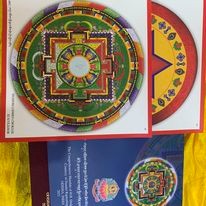
- The term ‘Mandala’ refers to the primary and secondary deities mentioned in the tantras and is also understood as the palace of the primary deities. To truly understand the nature of the mandala, when the disciple is initiated or introduced[to the mandala], there are types of mandalas such as the mandala of enlightened body, mandala of enlightened speech, mandala of enlightened mind. In addition, mandalas are classified as internal or external, mandalas of the roots, path or fruit, mandalas of peace, growth, veneration or subjugation; and mandalas belonging to different classes of inner or outer tantras such as the practice, action, etc.
- The massive collection of 78 mandalas of the Dudjom Tersar lineage was compiled and completed by Lama Sonam Tashi over many years. This is an extremely precious dharma treasure that can be used as a document for study, practice, as well as for worship to increase blessings for Buddhists in general, and yogis in particular.
In addition, faithful people can also request this Mandala (as well as the Troma Nagmo tantra) and respectfully place it in clean places such as bookshelves, cabinets, shelves, etc. It will certainly attract all good luck and success in life, because it is a perfect symbol of the presence of the Three Jewels, the Three Roots: Gurus, Yidams, Dakinis and Dharma Protectors.